

Forgiveness

No Contact: Relationships in a Cancel Culture World

No Contact: Relationships in a Cancel Culture World

“She’s gaslighting me.”

“He’s a narcissist.”

I regularly hear couples lob these accusations at one another as they sit across from me in my office. We live in a therapeutic culture, where psychologized language has permeated the way we talk about relationships. Categories and lingo once limited to clinical settings have become everyday vocabulary for explaining conflict.

Last year, Samuel James wrote an excellent post titled If You Ask AI for Marriage Advice, It’ll Probably Tell You to Get Divorced. The article is as good as its title suggests. In it, James shares a striking graph that tracks 15 years of relationship advice on Reddit.

‍ ‍

This Week's Recommendations

This Week's Recommendations
  1. When a crack becomes a chasm: Dave Almack says, “In years past, family disagreements often resulted in an uneasy detente and shallow conversations at gathering times. Today, in more and more cases, these disconnects have turned into outright hostility and accusations of wrongdoing by parents who have diligently tried to raise their kids to love and honor the Lord. It is a painful and almost unbearable experience to endure and far more common than many might know.

  2. Alysa Liu inspired an exhausted world: Brianna Lambert begins, "Last week, one of the most memorable moments of the Olympics occurred

This Week's Recommendations

This Week's Recommendations

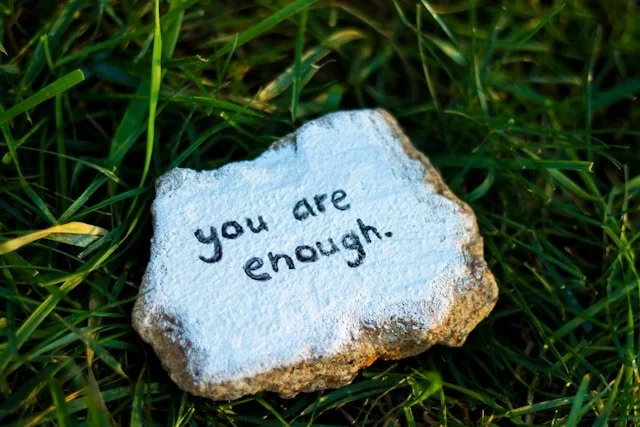
The reality behind our culture’s favorite mantra: Matthew McCullough begins, “I don’t know where it came from, but now it seems to be everywhere. I hear it on podcasts and TV shows. I’ve seen it on T-shirts and social media graphics. A quick search for it on Amazon brings up hundreds of results, ranging from books for kids and adults to silver charm bracelets to hoodies of many colors to embroidered makeup cases to wall hangings and throw pillows and stickers to place on your rearview mirror. I’m talking about the simple, uplifting mantra for our times: ‘You Are Enough.’”

How Motherhood Changed Me

How Motherhood Changed Me

Today I have the privilege of having my wife, Angel, share her thoughts on motherhood and her spiritual journey. You’re in for a treat. Angel is a counselor at Whole Hope Christian Counseling

 I am a type A, firstborn. By the time I was twenty, I had my life planned out. After marriage, John would work to get me through college, and then I would work as an elementary school teacher to get John through seminary without debt. Then he would graduate, we would move into our white-picket-fence dream home, start our family, and begin a life of ministry together.

I feel like you went through marriage, education, and childbearing at such a young age.  Would you please consider adding your age at various stages?  You’ll see my clues, lol.

Breaking the Power of Shame

Breaking the Power of Shame

Shame has power.

Shame is one of the most destructive forces on this earth. Shame is harmful because it attacks our spiritual and emotional life. Unlike guilt, shame can come from actions that aren’t even wrong. People experience shame over their body and over their family of origin. Shame is a visceral and physical experience that can manifest itself in depression and self-medicating. Shame tells us totalizing truths about ourselves, often truths that cannot be remedied. “You’re always,” “you will never” shame whispers.

Shame is different from guilt in that where guilt is connected with our actions, shame is connected to our identity.

Your Heart Is Not a Toy

Your Heart Is Not a Toy

“That isn’t a toy!” parents warn a child playing with a knife or a hammer.

Pharaoh thought he could play a game with God and win. He lost.

Your heart is not a toy.

The story of God’s battle with Pharaoh in the book of Exodus is the story of the consequences of a hardened heart. It’s the story of someone who thought they could toy with God and with their heart. We cannot.

In the first five plagues, Pharaoh’s hardens his heart three times and his heart “is hardened” (it’s ambiguous who is doing the hardening) twice.

This Week's Recommendations

This Week's Recommendations
  1. To be almost saved is to be completely lost: Tim Challies begins, “Along the coast of New York is a little town called East Hampton. And I recently read that there is a cemetery in East Hampton where you can find 12 identical graves that have been laid side by side. There’s a story behind them, of course.”

  2. All the ways I’ve hated myself: Brittany Allen shares, “This bully has been berating me for years. In fact, I’m not sure I’ve ever been rid of her. Because, as you probably already guessed, she is me.”

Aslan Was Wrong

Aslan Was Wrong

Like so many others, The Chronicles of Narnia is one of my favorite fiction series of all time. CS Lewis masterfully gives us insight into the heart of Christ and our relationship with him through the figure of Aslan. The tales teach us unforgettable truths about us about friendship, courage, and redemption.

Lewis brilliantly captures the weight of our sin against God. The figure of Aslan helps us see the price Christ paid to atone for our wrongdoings. Near the conclusion of The Lion, the Witch, and the Wardrobe we watch an interaction that gives us insight into the cost of our sin.

How to Apologize

How to Apologize

We live in an apology-averse culture.

We are allergic to repentance and forgiveness alike.

Think about it. When was the last time someone repented to you? I mean, truly repented?

The last time a congregant apologized to me, the email began this way (I’ve tweaked it only to protect the one who sent it), “I might have been a little harsh in my email.. I had a very bad week…” In further communication, the individual referenced their apology. I scratched my head. “When did they apologize?” I dug back through the email thread and saw those phrases. That is what they were referencing.

How to Forgive

How to Forgive

“How can I forgive them?” It’s a question spoken out of a yearning to release the one who has inflicted injury. It’s a question that is expressed out of hurt and sometimes anger.

How do we forgive the person who keeps sinning against us? How do we forgive the person who grievously sins against us? How do we forgive the person who sins against us and isn’t repentant?

Forgiveness is mandatory as a Christian. In his depiction of how we ought to pray, Jesus ties up our forgiveness with the forgiveness we offer, “and forgive us our debts, as we also have forgiven our debtors” (Matt 6:12).